Is Your Rolex Losing Time? Accuracy Troubleshooting
Is Your Rolex Losing Time? Accuracy Troubleshooting

I’m a certified watchmaker with more than 15 years under my belt, and I’ve worked on hundreds of Rolexes. Rolex is famous for being precise, but you’d be surprised how often I get asked, Is my Rolex accurate enough? A lot of owners come to me confused. They’ve noticed their watch gains or loses a few seconds each day, and they wonder if that’s okay for a high-end watch like a Rolex. Let’s really look at how Rolex watches keep time. We’ll clear up the myths, get to the facts, and figure out what usually causes those annoying timing issues. We’ll talk about it all—from magnetic fields and when to service your watch, to what you should realistically expect based on Rolex’s own official standards.
Recommended Products
You might be interested in these products
Table of Content
Rolex Accuracy Standards vs. How They Actually Perform.
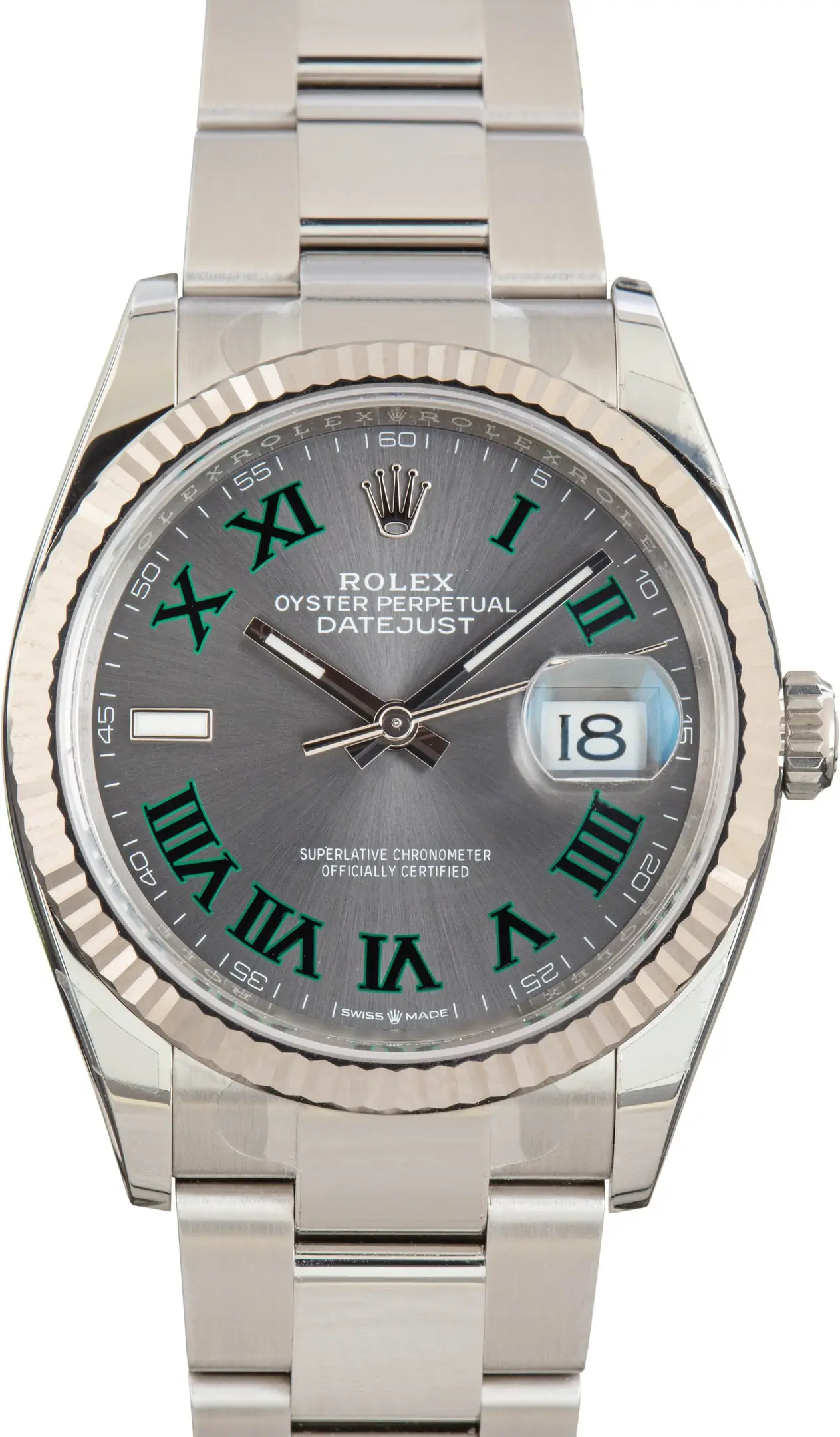
COSC Certification versus Rolex’s Own Superlative Test
Here’s the key thing: to judge Rolex precision, you start with their official certification. Knowing this is step one in figuring out if there’s really a problem.
Rolex doesn’t just hope for accuracy; they promise it by putting every movement through tough tests. Every modern Rolex movement is a COSC-certified chronometer.
meaning it has passed independent tests averaging -4/ 6 seconds per day in controlled conditions. However, Rolex then takes it further with its in-house Superlative Chronometer test, which promises accuracy within -2/ 2 seconds per day after casing.
It’s really important to know this spec. In my shop, that -2/ 2 range is what I go by when someone brings in a watch they think is running wrong. If it’s off by a few seconds but still in that range.
it’s not broken. That’s just Rolex’s own acceptable margin for a watch that’s working perfectly fine.
Now, real-world performance: you’ve got to balance your expectations with how things actually work. The forces your watch deals with on your wrist are nothing like what it faces on a test bench.
Wearing it every day adds a bunch of variables. How you lay it down at night, how active you are, even temperature changes—they all affect it. Here’s a simple test I tell my clients to try: leave the watch in one position overnight.
like face-up, and see how much time it gains or loses over 24 hours. Then, compare that number to how it runs during a normal day on your wrist. Often, the combined average still falls within the -2/ 2 sec/day spec.
but the daily fluctuation can be misleading. Don’t panic over a single day’s reading of 5 seconds if the next day it’s -1.
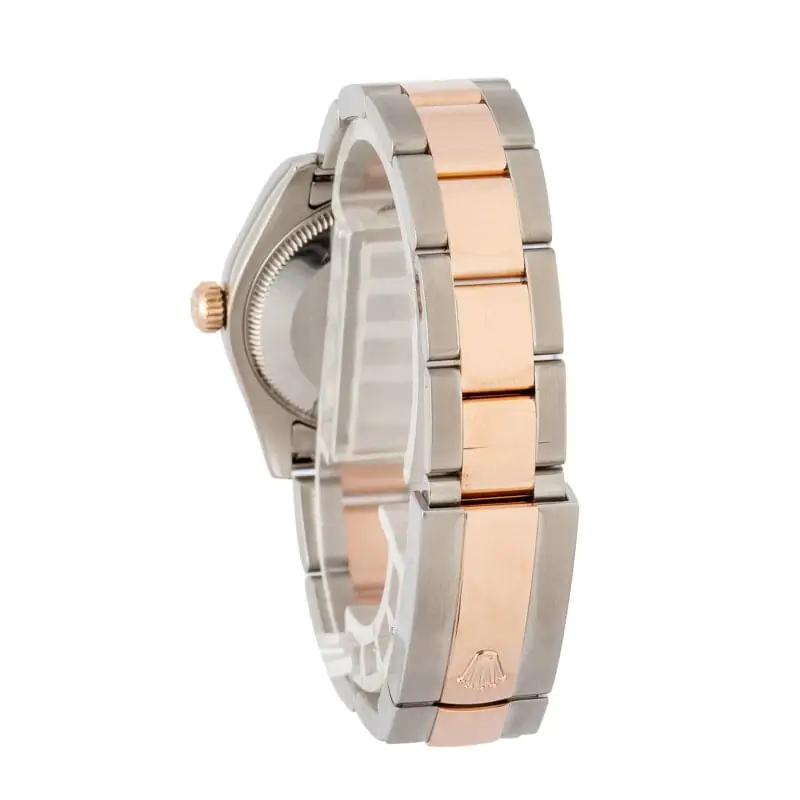
Let’s talk about what usually causes Rolex timing errors.
First up is magnetic interference – it’s like an invisible enemy.
Here’s a key step: always check for magnetism first. People often miss it, but it’s a common reason your watch suddenly starts gaining a lot of time.
Nowadays, magnets are all around us – think laptop lids, tablet covers, purse clasps, even speakers. Rolex uses a Parachrom hairspring that fights magnetism pretty well, but it can still get affected.
Get too close to a strong magnet, and those hairspring coils can stick. Then your watch might race ahead, gaining minutes every single day. The good news? Fixing it is usually easy. In my shop, I use a degausser.
Demagnetizing a watch takes half a minute, and if magnets were the problem, it’s accurate again right away. So, before you think there’s a big mechanical issue, just keep your Rolex away from anything magnetic for a couple days. See if that settles the timing down.
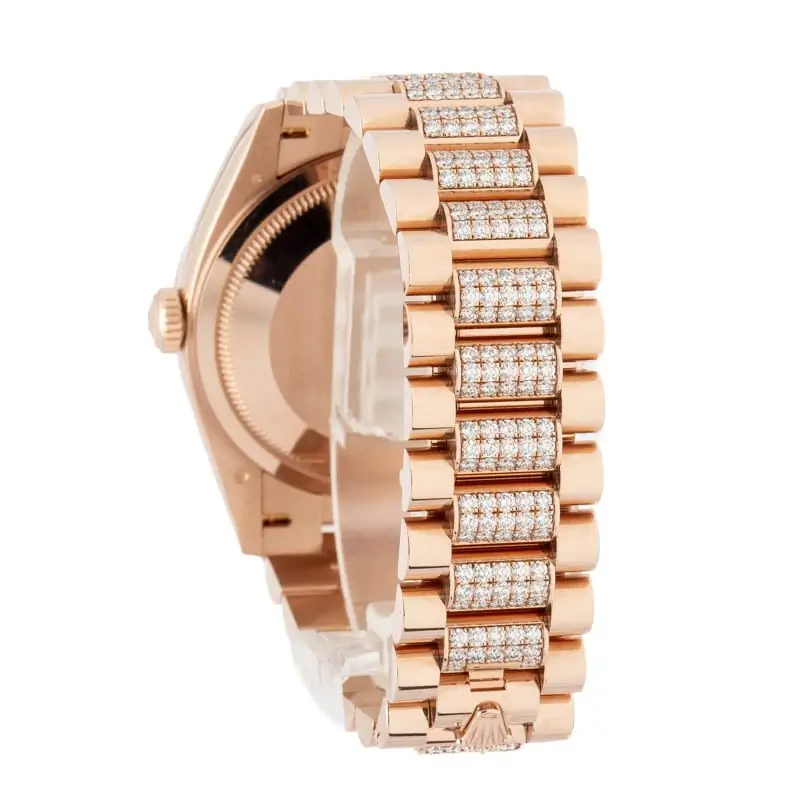
Next, let’s look at bumps and dried-up oil.
Here’s something useful to know: a hard hit or old, gummy oil can really mess with how the balance wheel swings.
A bad knock can knock the hairspring out of line, or even damage a tiny pivot on the balance wheel. More sneaky is the oil inside. Over 5 to 10 years, it just breaks down.
The oil gets thick and gummy, friction goes up, and the balance wheel doesn’t swing as far – that’s what we call low amplitude. When the amplitude is low, the watch gets picky about its position. That leads to really inconsistent timekeeping.
This isn’t about a part being broken. It’s the watch telling you loud and clear it needs a service. I remember one client’s Submariner. On the wrist, it gained 20 seconds. Left on the nightstand, it lost 30.
A full service cleaned it up and put in fresh oil. That brought the swing back to a healthy 290 degrees, and the accuracy was spot on again.
| Symptom | Probable Cause | Recommended Action |
|---|---|---|
| If it’s consistently gaining more than 10 seconds a day… | The probable cause is strong magnetic exposure. | You should get it professionally demagnetized. |
| Does it lose a lot of time when you’re not wearing it? | That points to a low power reserve or a mainspring issue. | Try winding it by hand, and consider a service. |
| Erratic gains or losses that change depending on how you lay the watch down? | That’s usually worn-out or dried-up lubricants in the movement. | Time to schedule a routine service. |
| A sudden stop, or a huge gain or loss all at once? | That’s likely physical impact damage. | Get a professional to look at it right away. |
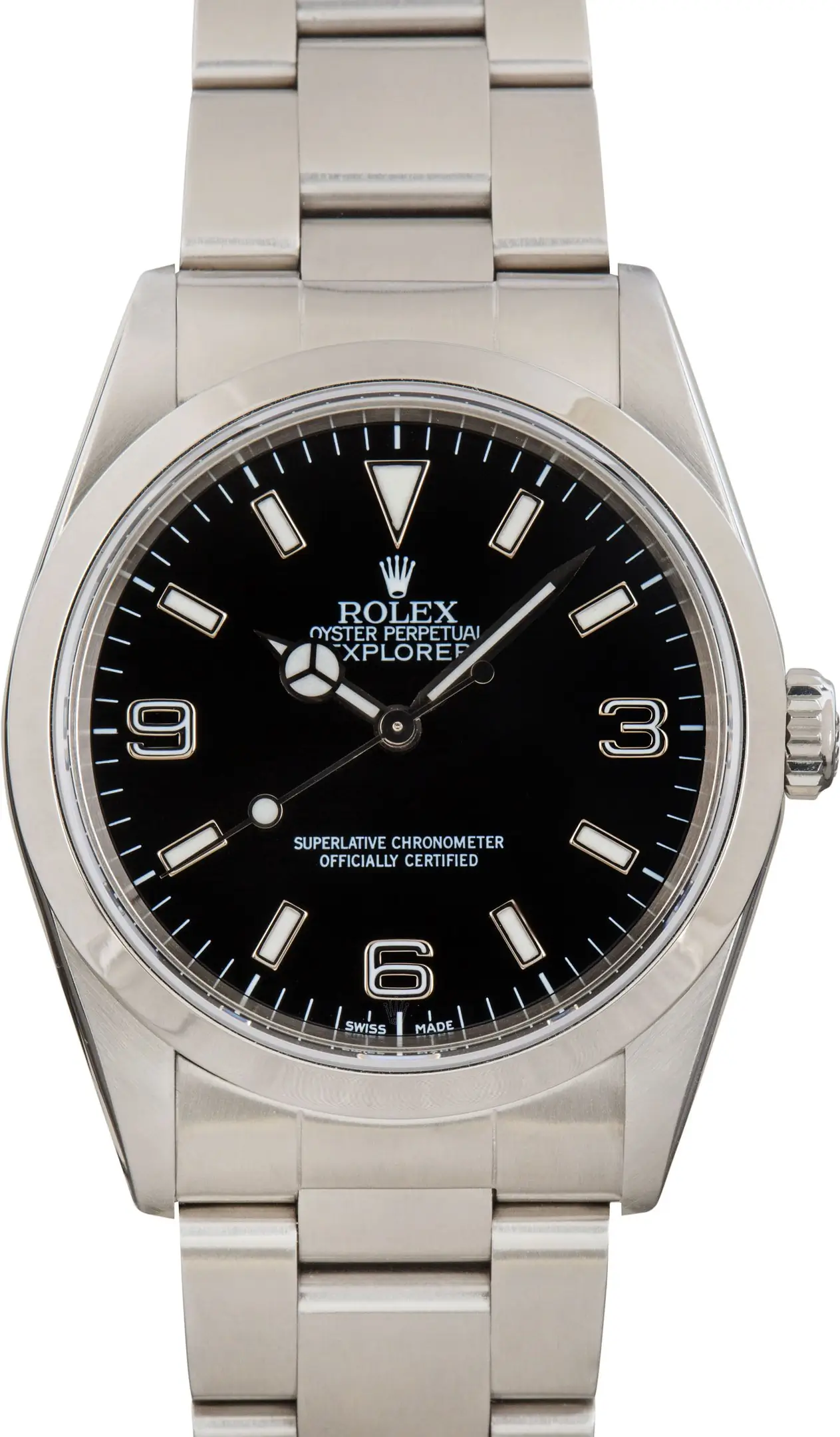
Want to know if your Rolex is keeping good time? Here’s how to check its accuracy properly.
First, you need the right approach and tools.
Forget about guessing. Getting an accurate reading means you have to be consistent and methodical.
Just comparing it to your phone’s clock won’t cut it—that’s not reliable. You need a solid reference point to get a true reading. My advice? Sync your watch exactly to a super-accurate source, like time.gov.
Then, just wear it normally for a day or two. After that, check it against that source again and see how much it’s off. If you want to get more technical, apps like Toolwatch on your phone can help you track the accuracy over longer periods.
The trick is to be consistent. Use the same reference, check at the same time daily, and jot down the numbers. Keeping this log is super helpful if you ever need to show it to a watchmaker.
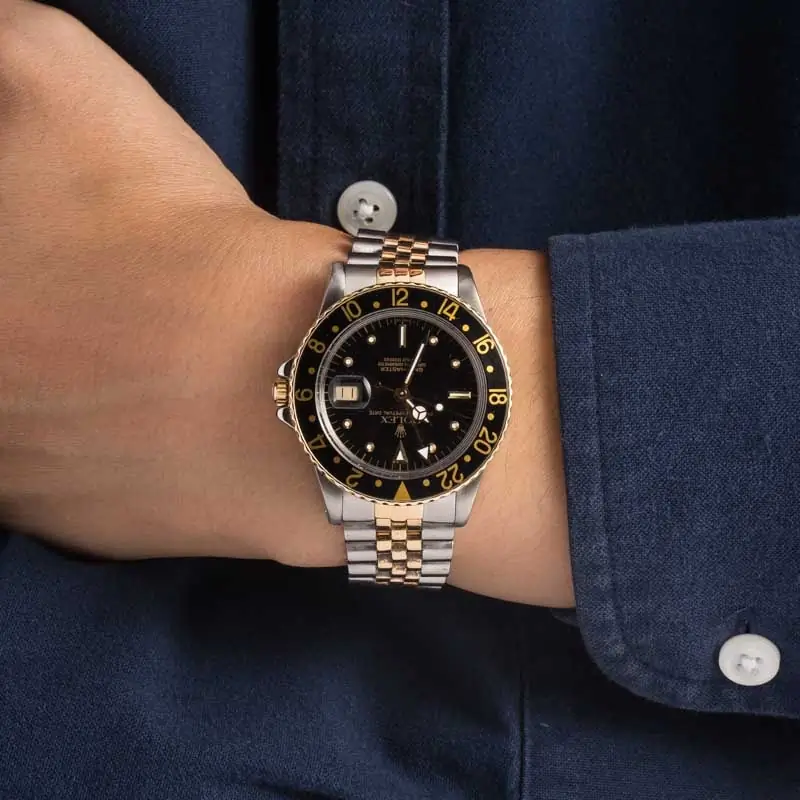
So, what do the results mean? When should you start worrying?
Look at your numbers next to Rolex’s own standards and think about when your watch was last serviced.
If your watch is within -2/ 2 sec/day, celebrate—it’s performing at the top of its class. Between -4/ 6, it’s still a certified chronometer. Consistent readings outside -6/ 8, especially if the watch has been recently serviced, warrant investigation.
The watch’s age is a big factor too. An older watch, say 20 years without a service, losing 8 seconds a day probably just needs a good service, not a major repair.
Here’s my simple rule: if the wrong time messes with your day, or if the rate suddenly changed from what it used to be, then it’s time to call in a pro.
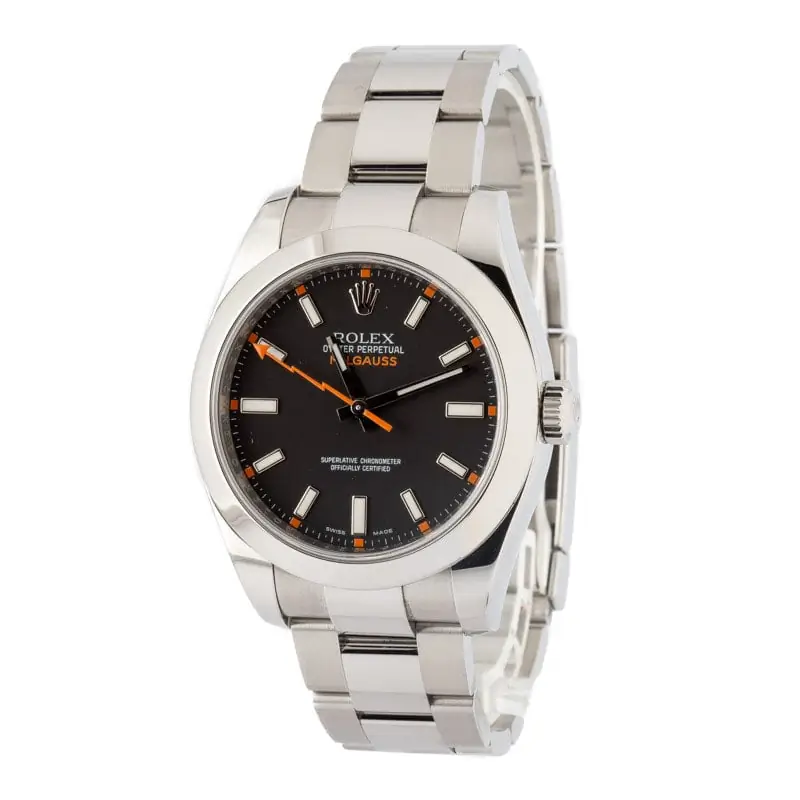
Why getting your Rolex serviced professionally is so important
So, what actually goes on during a Rolex service?
Let me break it down for you: a real service is a full restoration job, not just a quick tweak to fix the time.
When a Rolex comes to me with accuracy problems, fixing the time is actually the last thing I do. First, I take the whole movement apart. Then, I clean every piece in an ultrasonic cleaner and check for any parts that are worn out.
I swap out all the gaskets to make sure it stays waterproof. I give the mainspring, balance wheel, and escapement a really close look. After I put it all back together and add fresh oil, then I finally check the timing.
I use a machine to test it in different positions. We aim not just to meet the -2/ 2 standard but to achieve a flat, stable rate in all positions. This whole process makes sure your watch is reliable for the long haul, not just patched up for now.
| Watch Type / Age | Recommended Service Interval | Typical Service Focus for Accuracy |
|---|---|---|
| For a modern Rolex (made after 2000) | Think about servicing it every 10 years or so. | The service usually involves refreshing the oils, adjusting the timing, and checking the water resistance. |
| If you have a vintage piece (from before 1990) | You might need to service it more often, maybe every 5 to 7 years. | It might need some parts replaced, like the mainspring, and a really thorough overhaul. |
| For a watch you wear every day and has seen some action | Aim for a service around the 7 or 8 year mark. | This means a complete service of the movement and maybe sprucing up the bracelet too. |
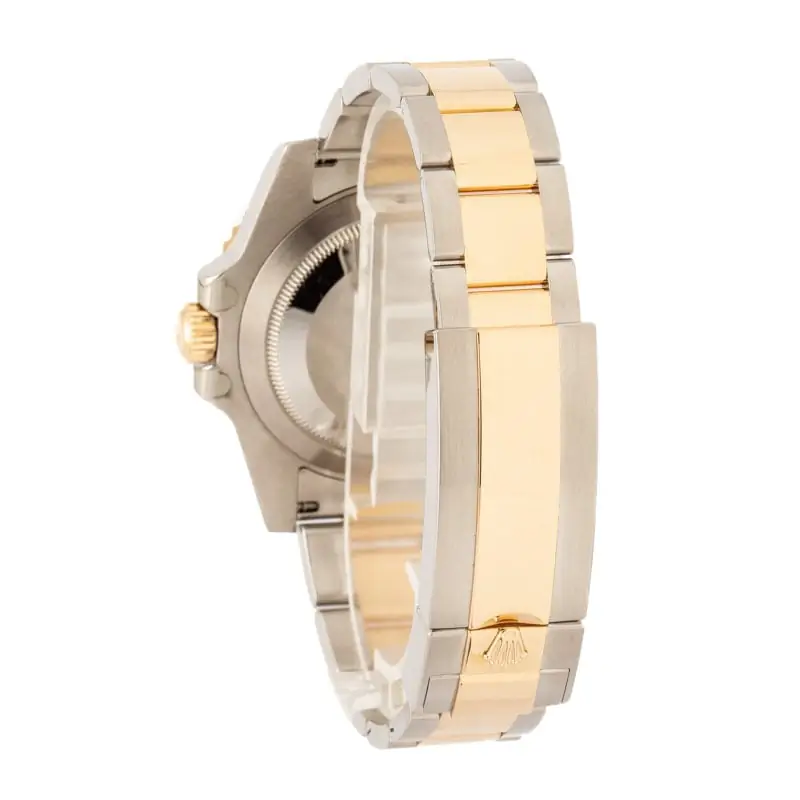
Should you go to an independent watchmaker or a Rolex Service Center?
It’s a big decision. You gotta think about what’s best for your specific watch and what you care about most.
Rolex Service Centers use all real rolex parts and their work is guaranteed by the brand. The downside? It can be pricey, and they sometimes want to swap out old parts, like the dial or hands, to make the watch look new again.
I’m an independent watchmaker trained specifically on Rolex. What I offer is more personal, often quicker, and usually easier on your wallet. I really focus on keeping your watch’s original character and its story intact.
If your watch is modern and still under warranty, the Rolex center is the safe bet. But for a vintage watch, or if you want a closer connection with the person fixing your watch, a trusted independent is usually the way to go.
Just make sure you check their credentials. Look for someone who’s part of a professional group, like the AWCI.
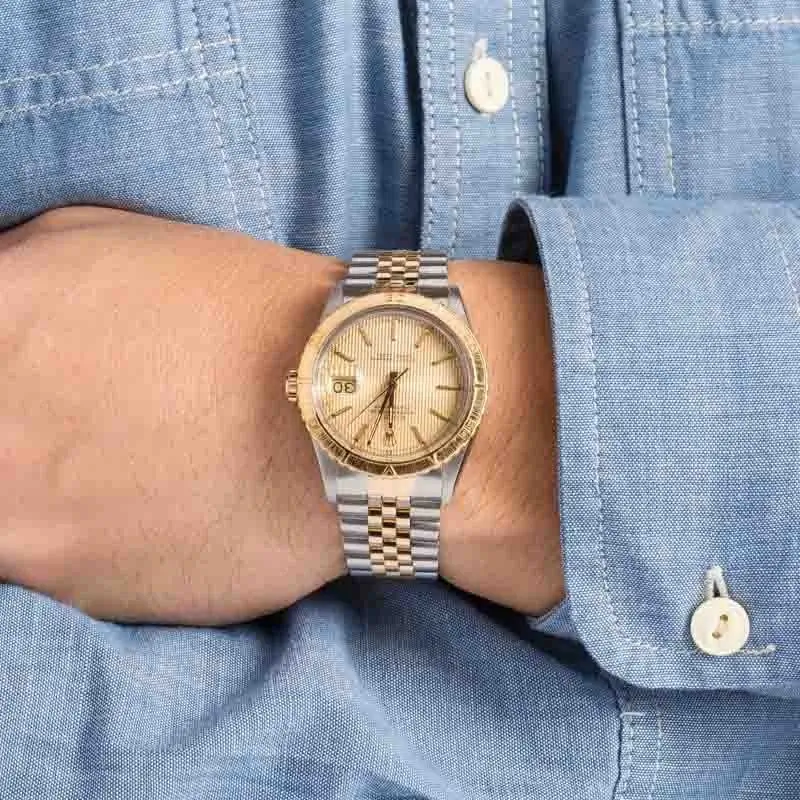
Alright, let’s talk about a real case: fixing a GMT-Master II that was losing time.
Here’s the client’s issue: a really special family watch that kept losing minutes.
I’ll tell you a real story that shows how we go from finding the problem to fixing it.
So, James got his dad’s old GMT-Master II from 2001. The thing was losing almost a minute every week. Because it meant so much to him, he was really worried. He was scared something major had broken inside.
When I checked it, my timing machine told the story. The balance wheel had very low swing, and the rate changed a lot depending on how the watch was sitting. The diagnosis wasn’t some big, scary thing.
Turns out, the movement was just all gunked up with old, broken-down oil from 20 years ago. Nothing was smashed or broken. It just desperately needed a good service—that’s what happens to all watches eventually.
Here’s how we fixed it and what happened: a careful, step-by-step overhaul.
Here’s the step-by-step fix that got the watch running right again.
I explained the service plan to James, making sure he knew we’d keep every single original part. During the overhaul, we found the mainspring and some crown wheel bearings were worn out, so we swapped those out.
Once everything was cleaned, oiled, and put back together, it was time to regulate it—to get the timing just right. Over several days, I fine-tuned the balance, achieving a final rate of 0.5 seconds per day in the dial-up position.
You could really see the relief on James’s face. He said, This whole story shows something important: most Rolex accuracy issues just mean it needs maintenance. It’s not a death sentence for the watch.
Preventive Maintenance and Best Practices
Daily Habits for Long-Term Precision
Here’s the thing: being proactive with simple habits can really help. It’ll make your watch run longer between services and keep it ticking steadily.
How you treat your watch every day directly affects how well it runs. If you’ve got a manual-wind Rolex, give it a full wind every morning—around 40 turns should do it. For automatic models, just make sure you’re moving your wrist enough.
Or, if your watch has a fancy calendar, a watch winder is a good idea. Try to keep it away from big temperature changes and really strong magnets. If you’re not going to wear it for a day, store it with the crown facing up.
This little trick helps balance out any timekeeping errors from different positions. Just give the case a gentle wipe with a soft cloth to get rid of sweat and dirt. It’s like changing your car’s oil. A bit of regular, easy care stops you from needing big, expensive fixes later on.
| Step | Action | Goal |
|---|---|---|
| 1 | Sync to atomic clock track for 48 hrs | Establish baseline accuracy |
| 2 | Keep away from magnets for 3 days | Rule out magnetic interference |
| 3 | Manually wind fully (40 turns) | Ensure full power reserve |
| 4 | Check service history | Determine if overdue for overhaul |
| 5 | Consult a certified watchmaker | Get professional diagnosis |
Conclusion and Final Verdict
When it comes to Rolex accuracy, it’s really a mix of two things: their amazing engineering and how you actually use the watch.
Sure, they’re built to incredibly high standards, but let’s be real—they’re not perfect machines that never go wrong. Most of the time, if your Rolex is running fast or slow, it’s for pretty ordinary reasons.
Think getting magnetized, just being old (the oil inside dries up), or maybe it just needs a quick tweak to get it back on track. So, don’t panic if you notice it’s gaining or losing a few seconds. First, check the timing properly.
Make sure nothing in your environment is messing with it, and think about when you last had it serviced. If you take good care of it, a Rolex should keep that super-accurate chronometer performance going strong for many, many years.
Just remember, if it’s off by a little bit, that’s usually the watch telling you it needs some attention, not that it’s broken for good.
Call to Action (CTA)
Ever had your Rolex act up with its timing? Drop your story in the comments below! Tell us about the most interesting Rolex accuracy issue you’ve run into.
Want to get more technical about how watches are regulated? Check out our companion piece, The Art and Science of Watch Timing.
Here are some common questions people have.
So, your new Rolex gains or loses a few seconds each day? Is that normal?
Yes, totally. A brand-new Rolex is regulated at the factory to meet its Superlative Chronometer standard of -2/ 2 seconds per day. If your watch is in that range, or even a bit off when it’s brand new.
that’s perfectly fine. It’s not broken. Remember, it’s a super precise mechanical watch, not some perfect atomic clock.
Thinking about fixing the accuracy yourself by adjusting it?
I’d really advise against that. Sure, you might find videos online showing you how to tweak a little lever inside. But that’s a quick and dirty fix that doesn’t solve the real problem. The accuracy tells you how healthy the whole watch movement is.
If the oils are dry or the spring is magnetized, just adjusting it won’t help for long. Plus, you could mess up your warranty. Always get a pro to check it out.
Okay, so how much does fixing a Rolex’s accuracy usually cost?
The price really depends on your specific model and what needs doing. A standard service from a good independent watchmaker might start at $500 to $800.
If you go straight to a Rolex Service Center, expect to pay more, maybe $800 to $1,200 or even higher. That service usually means they take the whole watch apart, clean every piece, re-oil it, tune it for accuracy.
and test it’s still waterproof. If they need to swap out worn parts, like the mainspring or a bearing, that’ll cost extra.
What about a watch winder? Will that make my Rolex more accurate?
Not exactly for accuracy, but it can make it run more consistently. The winder keeps the mainspring wound up. This gives the balance wheel steady power all the time.
So, it helps avoid those little speed changes that happen when a manual watch starts to run down. But listen, a winder won’t fix real problems. Things like magnetism or a watch that just needs a service.
Just make sure your winder is set right for your specific Rolex model—the correct number of turns per day.