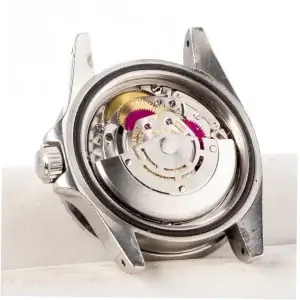
Why is my Rolex losing minutes daily?
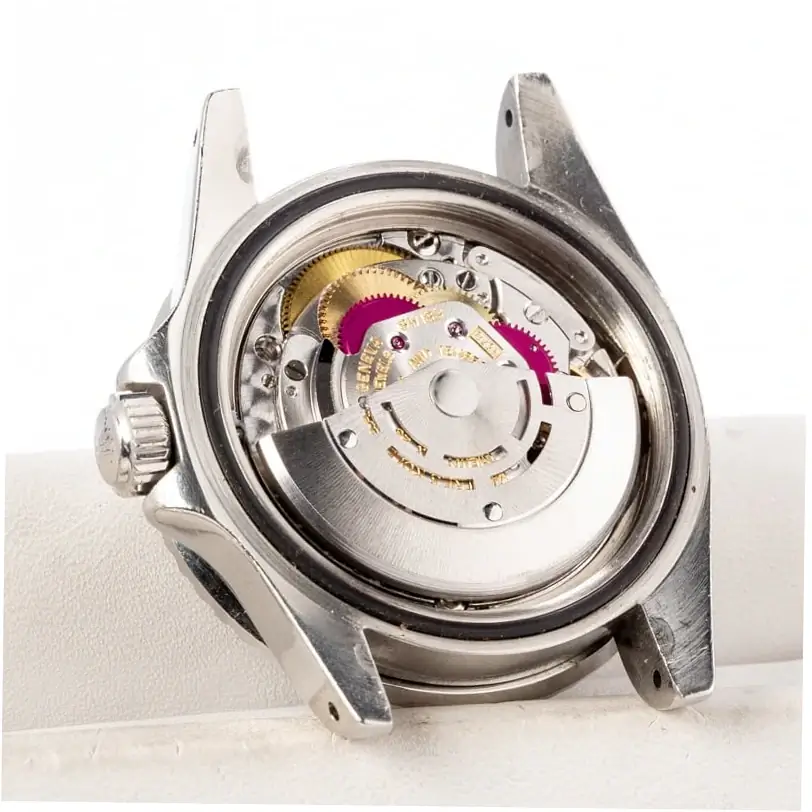
Why is my Rolex losing minutes daily?

So, you’ve spotted your favorite Rolex isn’t running right—it’s losing a few minutes every day. Pretty unsettling, right? That reliable wristwatch, famous for being spot-on, now feels like it can make mistakes. Don’t freak out just yet. This is a common problem, and there are usually fixes for it. This guide will show you why your Rolex might be losing minutes per day. We’ll cover everything from simple magnetism to trickier mechanical wear. You’ll get a clearer picture of what’s going on inside that famous Oyster case.
Recommended Products
You might be interested in these products

Table of Content
So, why is your Rolex losing minutes every day? Let’s look at the usual suspects.
First up, magnetic fields and getting demagnetized.
The key here is to spot and steer clear of anything magnetic. Our daily lives are packed with hidden stuff that can mess with your watch’s timekeeping.
Powerful magnets are everywhere—in speakers, laptops, tablets, MRI machines, even the clasp on a handbag. They can magnetize the hairspring, which is basically your Rolex’s heart. When the hairspring gets magnetized, its coils can stick.
This makes the balance wheel swing too quickly, so your watch usually starts running fast. But sometimes, especially with older watches or if other parts get affected, it can cause weird issues like losing time, too.
Here’s the good part: a watchmaker can fix this easily. Demagnetization is a quick and simple job.
Next, you need to know the signs of a magnetized watch. How do you figure out if magnets are to blame? If your Rolex is gaining or losing several minutes a day, that’s a big clue. Another classic sign?
It stops completely when you lay it down in a specific way. Try a free compass app on your phone. Hold your watch close to it and slowly move them in a circle together. If the needle jumps around, your watch is probably magnetized.
Watch expert John Davis puts it well: magnetism is a silent killer for accuracy, but thankfully, it’s also one of the easiest problems to spot and fix.
Now, let’s talk about servicing and lubrication.
The main thing is to stick to the recommended service schedule. Think of your Rolex movement like a high-performance engine—it needs regular check-ups. Rolex says to get it serviced about every ten years, but how you use it really matters.
Over the years, the oils inside can dry out, get gummy, or collect tiny bits of dust and metal. That creates more friction between all those tiny, moving parts. More friction means the mainspring’s energy doesn’t reach the balance wheel as well.
The oscillations get weaker, and that’s why your watch starts running slow, losing minutes each day. This is actually the top reason a healthy Rolex will gradually and steadily lose time.
Let’s talk about mechanical wear and parts problems in your Rolex.
First up, hairspring and balance wheel issues.
Here’s the core idea: you need to get how the regulator system works. A watch’s accuracy, like your Rolex losing minutes per day, really depends on the balance wheel and hairspring. A watchmaker adjusts these.
The hairspring needs to breathe perfectly, expanding and contracting in a nice, even circle. That’s super important. If it gets bent, dirty, or just stuck in one position for ages, it won’t swing right anymore.
Also, a knock can mess up the regulator pins. Those little pins control how long the hairspring acts. Just a tiny shift here can make your Rolex lose or gain minutes every single day. Fixing this is really fiddly and needs a specialist.
Next, let’s look at mainspring and gear train friction.
The main point here is that wear and tear hurts the power flow. The mainspring is like the engine, and the gear train passes that power along. If the gear train holes or teeth get worn down, or if the mainspring gets weak.
not enough juice gets to the escapement. Then the escapement can’t give the balance wheel a good enough push to keep it swinging fully. A balance wheel that doesn’t swing wide enough is a top reason your Rolex starts losing minutes per day.
This kind of wear gets worse over time. It’s a clear sign your watch is way past due for a full service.
| Symptom | Likely Cause | How Bad It Usually Is (Time Loss/Gain) |
|---|---|---|
| Losing 2 to 5 minutes every day, like clockwork. | The oil’s dried up, or there’s just general wear and tear. It needs a service. | It’s a moderate problem that keeps getting worse. |
| The timekeeping’s all over the place, fast one minute, slow the next. | It could be magnetized, or the hairspring is sticking. | This can get pretty bad, losing or gaining minutes daily. |
| It stops when you lay it flat but runs when you stand it up. | There’s likely a worn pivot or other issue that only shows up in that specific position. | It might stop completely or just lose a ton of time. |
| A big time loss that happens suddenly after a knock or drop. | The hairspring got bent, or the regulator moved. | This is often really severe, causing your Rolex to lose many minutes per day. |
Environmental and Usage Factors
Temperature Extremes and Shock
Core Operation: You should keep your watch away from really hot or cold conditions. Sure, Rolexes are tough, but they still have to follow the laws of physics.
If it gets too cold, the oils inside can thicken up, which makes the watch run slow for a while. On the flip side, too much heat thins those same oils out, messing with how well everything moves. But honestly, the usual culprit is a hard knock.
Banging it on a door or dropping it can really shake up the tiny parts that keep time. That kind of shock can mess up the hairspring, move the regulator, or even bend or snap a tiny pivot. So, if your Rolex started losing minutes right after you whacked it, shock damage is probably to blame.
Positional Variance and Winding Habits
Core Operation: Pay attention to how it keeps time in different positions. Gravity tugs on the movement, so every mechanical watch runs a bit fast or slow depending on whether it’s lying flat, on its side, and so on.
Watch folks call this positional variance. Your watch could be spot-on when you’re wearing it, but lose minutes if you leave it in a different spot overnight. Say you always put it crown-down on your nightstand.
If that position makes it run slow, you’ll see those lost minutes add up every morning. Also, if you don’t move around enough while wearing your automatic Rolex, it might not wind fully. As its power runs low, it’ll start losing time.
Figuring out why your Rolex is losing minutes each day
You can try a couple of simple tests at home first.
The main idea is to check its power reserve and see how it runs in different positions. Before you take it to a pro, collect some info yourself. Start by winding it all the way up—that’s about 30 to 40 turns for an automatic.
Write down the exact time. Wear it like usual for a day, then just let it sit until it stops ticking. The time from full wind to when it stops is your real power reserve. Most newer Rolexes should last around 48 hours.
If it dies way sooner, there’s probably a problem with the power. Next, check how accurate it is in different positions. Let it run about halfway down, wind it fully again, and leave it face-up overnight.
See how much time it gains or loses. Do the same thing the next night, but put it on its side. If it’s consistently off by a lot in different positions, it might need adjusting or has a balance issue.
So, when should you get a professional to look at it?
The key thing is to know what you can and can’t fix yourself. Sure, you can buy demagnetizers online and even learn to tweak the timing. But messing with a Rolex movement isn’t a good idea if you’re not an expert.
Opening it up yourself will also void the warranty if it’s still covered. If just keeping it away from magnets and winding it fully doesn’t stop it from losing minutes every day, then you need a pro to check it out.
A certified Rolex watchmaker has special tools, like a timing machine. This machine shows exactly how the watch performs in every position. They can tell if it’s magnetized, just needs a service, or has a broken part.
| The Problem or Service | How Complicated It Is | About How Long It Takes | Estimated Cost (in USD) |
|---|---|---|---|
| Demagnetizing it | Super simple | Just 5 to 10 minutes | $50 to $150 |
| Adjusting the timing (regulation) | Fairly simple to a bit tricky | 30 minutes to an hour | $100 to $250 |
| A full service | Pretty complex | 4 to 8 weeks | $800 to $1,200 |
| Fixing the hairspring or balance wheel | Very Pretty complex | 8 to 12 weeks | $500 – $1,500 (plus service cost) |
Preventive Maintenance and Best Practices
Regular Servicing Schedule
Here’s the key thing: plan your maintenance ahead of time. The best way to stop your Rolex from losing minutes per day is to take care of it before problems start. Don’t wait until it stops ticking or starts losing ten minutes every single day.
Top watchmakers all agree: even if your watch seems okay, get it checked every five to seven years if you wear it regularly. This lets a pro clean it, re-lube it, and tweak things before everyday wear leads to serious damage or makes it lose time.
A Rolex Service Center tech once told me, We get a lot of watches that haven’t been serviced in 15 years. By then, the time loss is really bad, and fixing all the worn-out parts costs way more than a regular service would’ve.
Daily Care to Maximize Accuracy
The main idea? Make watch-friendly habits part of your routine. What you do every day affects how long your watch lasts. Stay away from strong magnets. Keep your watch off speakers and laptops.
If you’re not moving much all day, give your automatic watch a few manual winds. It keeps the mainspring charged up. Not wearing it for a couple days? A watch winder can help. Just get a good one that lets you set the turns per day (TPD).
Your Rolex usually needs about 650 to 800 TPD. Finally, if you own more than one watch, switch them out often. This helps keep the lubricants moving inside. These easy habits can help you avoid needing a service way too early.
Summary and Actionable Insights
Let’s break down the main points. If your Rolex is losing minutes every day, it’s usually just a sign of something else going on, not that the watch is completely broken.
The reasons can be simple, like it got magnetized, or more serious, like normal wear and tear that means it needs a pro to look at it. The trick is to check things step by step: first see if it’s magnetized.
then think about how you wind it, and notice if the time loss changes when you lay it down differently. If it keeps losing a lot of time, that’s your cue to definitely take it to an expert.
Don’t forget, these watches are tiny engineering wonders, built to last and be loved for a really long time with the right care.
Now, let’s make a plan to fix it. Now you know what’s up, so don’t just put up with a watch that tells the wrong time. First off, try those easy checks you can do at home.
If it seems like magnetism or you still can’t figure it out, get a good, certified watchmaker to check it out. Paying for a proper service is really investing in your watch—it’ll keep it running well and hold its value. Your Rolex should work as beautifully as it looks on your wrist.
Here are some common questions people have.
So, your Rolex is losing a few seconds every day? Is that normal?
Yes, totally. Rolex’s own superlative chronometer certification requires accuracy within -2/ 2 seconds per day. So if your Rolex is new or just got serviced, it should keep time that well. Honestly, losing or gaining just one to three seconds consistently is actually great for any mechanical watch.
Can I just tweak my Rolex myself to stop it from losing time?
I really wouldn’t recommend that. Some watches might be easy to adjust, but modern Rolexes are different. You need special tools and know-how to do it right, otherwise you could mess up the delicate balance inside.
If you get it wrong, the timekeeping could get even worse, or you might cause new problems. It’s much safer to let a pro handle it, especially for a watch as valuable as a Rolex.
Okay, so how much will it cost to get a Rolex that’s losing time fixed?
The price really depends on what’s causing the issue. Something simple like demagnetizing it or a quick adjustment might run you between a hundred and two hundred fifty bucks.
A full service by Rolex itself, which fixes the timekeeping, usually starts at about eight hundred dollars. For fancier models, it can hit twelve hundred or even more, especially if parts need replacing. You might find better prices at an independent watchmaker.
What if I don’t wear my Rolex very much? Could that make it lose time?
It definitely could, yeah. See, automatic watches wind themselves from your movement. If you don’t wear it much and don’t wind it by hand, it’ll run low on power. When that happens, it often doesn’t keep time as well.
To keep it running right, you can use a good watch winder, or just give it a manual wind every couple of days. That’ll keep the power up and the time accurate.