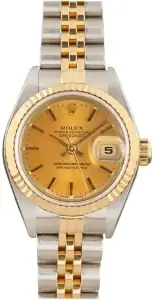
Why is my Rolex watch losing time?
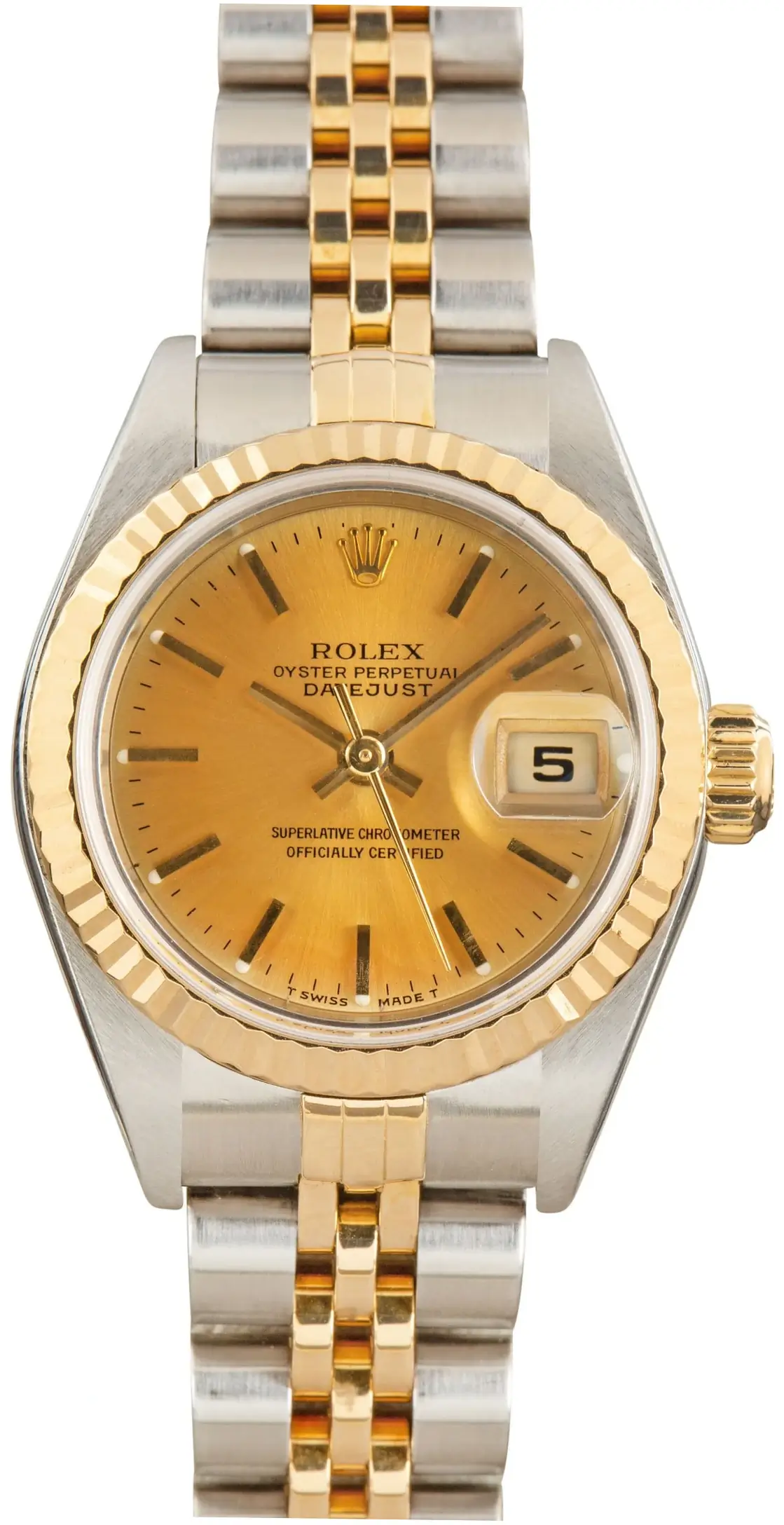
Why is my Rolex watch losing time?

You check your wrist, hoping for that famous Rolex accuracy, but it’s actually running a few minutes behind. Plenty of Rolex owners know that awful feeling all too well. When your Rolex isn’t keeping time right, it feels like it’s failing at its main job. This guide helps with that worry. We’ll look at the reasons why a Rolex might stop keeping good time, and they’re more common than you’d think. We’ll explain the causes, from getting magnetized to parts just wearing out. Then, we’ll give you straightforward steps to figure out the problem and fix it, so your watch is dependable again.
Recommended Products
You might be interested in these products
What’s Inside
So, why is your Rolex not keeping time? Let’s look at the usual suspects.
First up, magnetic fields. They’re like an invisible thief stealing your watch’s accuracy.
Core Operation: Identify and Demagnetize: Your Rolex is an engineering wonder, but that tiny balance spring inside? It’s super sensitive to magnets. Everyday stuff can mess it up: think laptops, speakers, fridge magnets, even a clasp on your bag.
This makes the hairspring coils stick. The result? Your watch suddenly runs super fast, maybe gaining minutes each day. Here’s the good part: fixing this is usually a breeze.
A watchmaker can spot the problem in a flash with a tool called a fluxmeter. They’ll demagnetize it in seconds, and bam, your timekeeping is back on track.
Core Operation: Prevent Future Exposure: Once it’s fixed, you just gotta be more careful. Pay attention to where you put your watch down. Don’t leave it sitting on gadgets or close to anything with a strong magnet.
Sure, some modern Rolexes like the Milgauss are built to handle magnets, but for most models, it’s better to play it safe. Take my client Michael. He said his Submariner was gaining half a minute every single day.
Turns out, he was leaving it on his wireless charger every night. We demagnetized it, he stopped putting it there, and the problem was gone for good.
Next, let’s talk about bumps, knocks, and when it’s time for a service.
Core Operation: Assess for Physical Trauma: If you drop it or give it a hard whack, that can really throw off the delicate timing mechanism inside. Parts like the balance wheel or its tiny bearings can get damaged.
That’ll make your watch run all over the place or just stop working. The watch does have shock protection, but a really bad hit can be too much for it to handle.
So, if your Rolex started acting up right after you banged it, physical damage is probably the culprit. Give it a gentle shake. Hear any weird grinding or scraping? That’s a dead giveaway something’s broken inside.
Core Operation: Understand the Service Imperative: Remember, these aren’t magic machines that run forever. Over the years, the oils inside dry out and get gummy. That creates more friction.
Gears wear down, or the balance wheel gets a little unbalanced. That leads to your watch consistently running fast or slow. Here’s a quick guide to how a healthy Rolex should run and when it’s screaming for a service.
| What’s going on | How fast/slow per day | What to look for |
|---|---|---|
| In good shape, just serviced | -2/ 2 seconds per day | It’s consistently a little fast or slow, and you can predict it. |
| Starting to need service | -5/ 10 seconds per day | The timekeeping gets less steady. It changes depending on how you leave it overnight. |
| Needs help now | Losing or gaining over 30 seconds a day, or it’s all over the map | It stops for no reason, ticks really loud, or the time changes wildly with position. |
Figuring out why your Rolex isn’t keeping time right
You can do a simple timing check yourself at home
First thing, don’t panic. Start by collecting some data on how much it’s off. Grab a super accurate time source, maybe an atomic clock app on your phone, and write down your Rolex’s exact time. Just wear it like you usually do for a full day.
After that, see how much it’s gained or lost. Do this for a few days in a row, maybe three to five. Keep track of whether it’s always running fast or slow, and by how many seconds.
Also, try leaving it in different positions overnight, like face-up or on its side. See if that makes a big difference in how fast or slow it goes. A watchmaker will find this info super helpful.
Say it loses time on your wrist but gains time when you leave it crown-up. That’s a clue—it could be a regulation or balance wheel issue.
Next, check the power reserve. When fully wound, your Rolex should keep going for about two to three days, depending on which model you have. If it quits on you in less than a day of normal wear, that’s a problem.
The automatic winding might be faulty, or the mainspring could even be broken. Here’s a test: wind it by hand around 30 to 40 times. Then let it sit and see how many hours it ticks before stopping.
A short power reserve messes with accuracy. As the spring winds down, the watch can’t keep steady time.

So, when should you get your Rolex professionally fixed?
Look out for signs that go beyond just needing a simple tweak.
Here’s the deal: you need to tell the difference between a small problem and a big one. If demagnetizing your watch doesn’t fix it, and your own timing check shows it’s way off and inconsistent, then you definitely need a pro to look at it.
Watch for red flags. These include the second hand jerking instead of gliding, a rattling noise from inside the watch, or any fog or moisture under the glass. These are clear signs of internal damage. You can’t fix this kind of stuff yourself.
If you try to pop the back off yourself, you might let dust in, wreck the seal (which means it won’t be waterproof anymore), and you’ll kiss any leftover warranty goodbye.
Next step: picking a good repair shop. Basically, you’ve got two choices: an official Rolex Service Center, or a skilled independent watchmaker. Rolex Service Centers use only brand-new, genuine Rolex parts.
They give you a two-year warranty on their work and make sure your watch is back to its original specs. Independent experts might cost less and get the job done quicker.
They’re also usually more open to keeping your watch’s original parts, like the hands or face, if that’s important to you. Doing your homework is key. Ask them for references, look them up on watch forums.
and make sure they have solid experience working on Rolex movements. Take Sarah’s vintage Datejust, for example. A trusted independent watchmaker fixed it up. The official Rolex center wanted to swap out the original face, but the independent guy fixed the movement and kept that beautiful aged look.
| What to Think About | Rolex Service Center | Independent Watchmaker |
|---|---|---|
| Parts They Use | Only brand-new, official Rolex parts. | Might use genuine parts, old stock, or top-notch compatible parts. |
| Cost | Usually costs more, with a set price list. | Often more affordable, and you might be able to discuss the price. |
| How Long It Takes | Often takes 8 to 12 weeks, sometimes even longer. | Can be faster, averaging around 4 to 6 weeks. |
| Flexibility | They follow strict rules and might insist on replacing parts. | They’re usually more flexible and might work with you to preserve original parts. |
Here’s what you can expect when you send your Rolex in for service.
It all starts with a check-up and can lead to a full overhaul.
First up is the initial evaluation. When your Rolex arrives, it gets a really thorough check. The watchmaker starts by checking if it’s become magnetized. Then, they put it on a timing machine, like a Witschi.
This machine spits out a graph called a timing trace. That trace shows all sorts of problems that could be causing your Rolex not to keep time—like low amplitude, beat error, or if it runs differently in different positions.
After that, they’ll give you a quote. It usually covers a full movement overhaul, polishing up the case and bracelet, and a pressure test to make sure it’s still waterproof.
Now, let’s talk about what a full overhaul actually involves. It’s a super detailed job. They take the whole movement completely apart. Every tiny part gets a deep clean in ultrasonic baths.
Then, they look at each one under a magnifier and swap out any bits that are worn down. Next, they put it all back together, add special synthetic oils for lubrication, and fine-tune it in different positions.
The goal is to get it back to that top-notch, chronometer-level accuracy so it stops not keeping time. They also polish the case and bracelet to look new, and put in fresh gaskets to keep the water out.
The whole thing basically gives your watch a new lease on life. It’ll often run like it’s brand new for another 5 to 10 years.
How to take care of it to keep it accurate.
Simple daily habits that help in the long run.
First, get your winding and wearing habits right. If you don’t wear it every day, you need to keep it ticking. Use a watch winder, or just wind it by hand about once a week. This helps spread the oils around inside.
When you wind it by hand, stop as soon as you feel a bit of resistance. For a Rolex, that’s normally after 30 or 40 turns. Don’t wind it while it’s on your wrist, though. That can put stress on the stem.
And always, always screw the crown down tight before it gets near any water. That keeps the seal working properly.
Second, stick to a regular service schedule. Think of it like a check-up for your watch, not major surgery after it’s already broken. Rolex says to get it serviced about every 10 years, but that really depends on how you use it.
If you wear it every day and are really active, you might need to send it in every 5 to 7 years. Getting it looked at regularly stops small wear and tear from turning into a big, expensive problem that makes your Rolex not keep time.
Try keeping a simple note of how well it’s keeping time. If you notice it’s slowly getting less accurate, that’s your sign to get a check-up before something major goes wrong.
Cost Considerations and Value Retention
Investing in Your Timepiece’s Health
First things first, let’s talk money for servicing your Rolex. The cost really depends on which model you have and what kind of work it needs. For a simple model like an Oyster Perpetual.
a basic service at an independent shop might run you about $800. But if you send a complex Daytona to a Rolex Service Center (RSC), you could be looking at over $1,500. And that’s before any extra parts, like a new dial, hands, or bracelet links.
Those will bump up the price. Sure, it’s not cheap, but think of regular service as an investment. It protects the much bigger value of your actual watch. A Rolex that’s not keeping time well will sell for a lot less than one that’s just been serviced and comes with full paperwork.
Here’s another way to look at it. Spending maybe $1,000 every ten years on service is pretty small compared to how much a Rolex can be worth or hold its value over time.
If you skip service, a tiny worn-out part could wreck something major, leading to a nasty $5,000 repair bill down the line. Plus, having a full service history from a trusted expert makes your watch more desirable.
It proves it’s been looked after properly. Buyers will trust it more and see it as a solid asset because a pro has taken care of it.
So, to wrap it up, if your Rolex isn’t keeping time, don’t panic. It’s a fixable issue, not the end of the road. Getting from annoyed to fixed means checking things step by step.
First, see if it’s magnetized, then look for any damage, and finally, keep an eye on how it’s running. A professional service is the real fix for wear and tear.
Yes, it costs money, but it gets your watch accurate again and gives you total peace of mind, knowing your prized possession is working perfectly. Just remember, these watches are made to last a lifetime and more, but they do need a little TLC now and then to live up to that promise.
Feeling ready to figure out what’s up with your watch? Tell us about your Rolex timekeeping troubles or the specific issues you’re seeing in the comments. Folks in our community and even some watch experts might have some helpful tips!
If you want to really get into the nitty-gritty of how your watch works, check out our full guide on understanding your Rolex’s timing machine report.
FAQ: Rolex Timekeeping Problems
Can a magnetized Rolex be fixed easily?
Yeah, for sure. If your Rolex is running fast, getting magnetized is actually a super common reason, and it’s really easy to fix. A good watchmaker can spot this in seconds with a special tool called a fluxmeter.
Then, they just use a demagnetizer to fix the movement. The whole thing only takes a moment, and it usually doesn’t cost much—sometimes it’s even free if they’re just checking the watch out. Right after that, your watch should be keeping perfect time again.
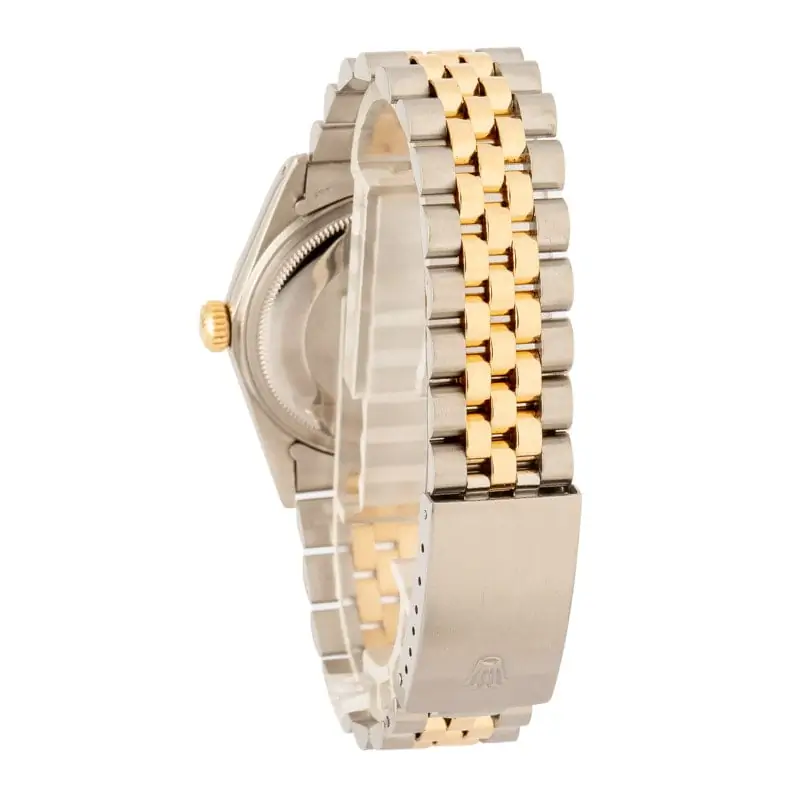
How accurate should a properly functioning Rolex be?
Rolex’s internal standard for its Superlative Chronometer certification is -2/ 2 seconds per day. This is stricter than the official COSC chronometer standard of -4/ 6 seconds.
A healthy, recently serviced Rolex should consistently perform within this tighter -2/ 2 range in real-world wearing conditions on the wrist.
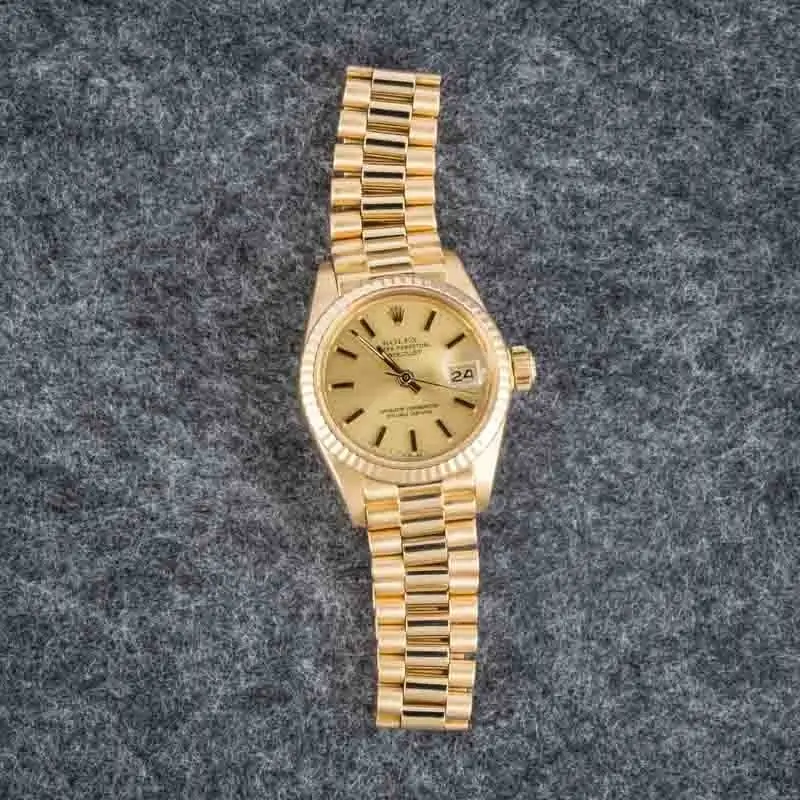
How often does a Rolex need servicing to maintain accuracy?
Rolex says you should get your watch serviced about every 10 years. But that’s just a general rule of thumb. If you wear it hard, expose it to extreme conditions, or notice it’s consistently losing or gaining more than a few seconds.
you might need to get it looked at sooner—maybe every 5 to 7 years. Staying on top of maintenance stops small problems from turning into big, expensive ones.
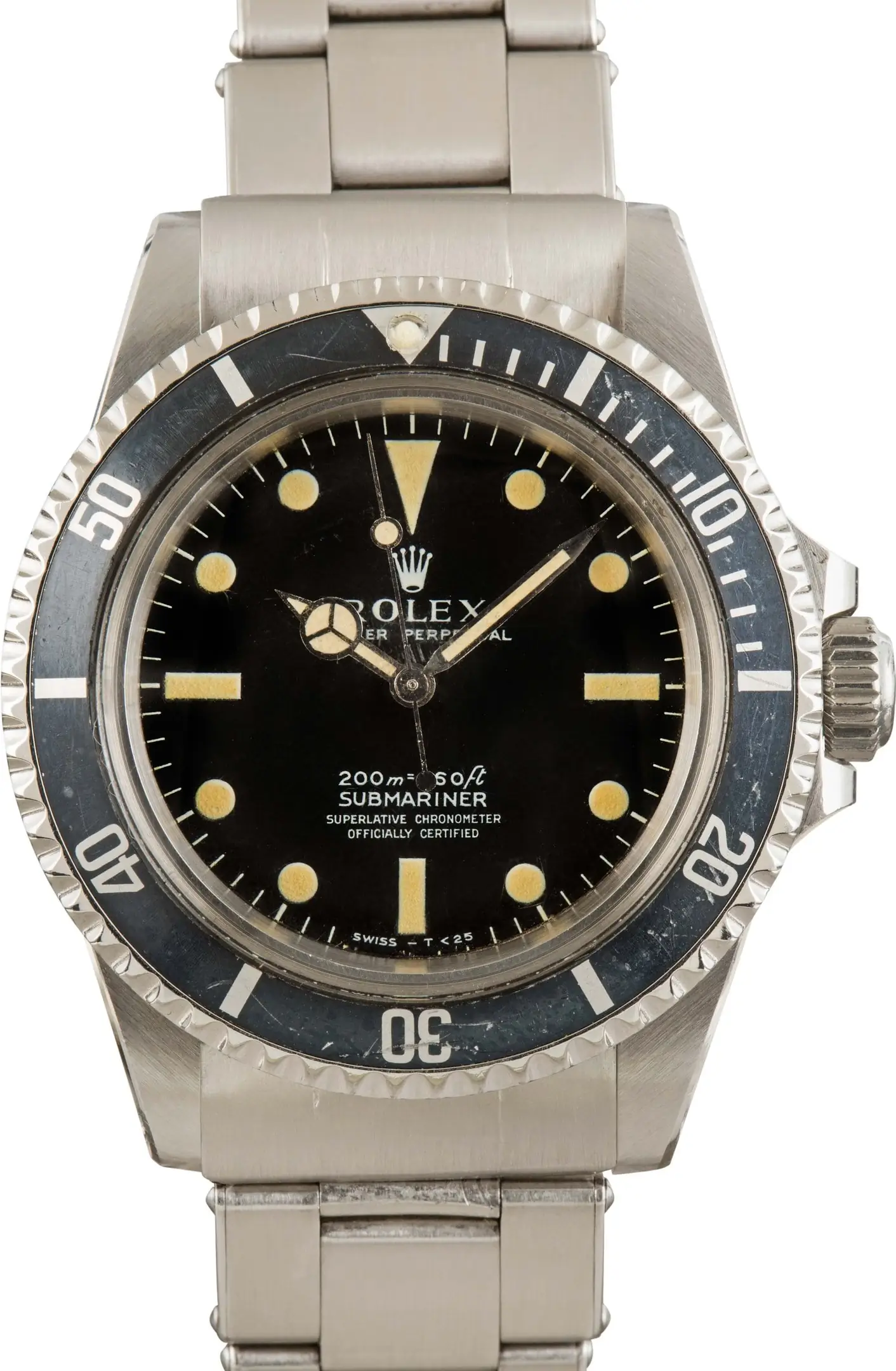
Is it worth servicing an old Rolex that’s losing time?
Pretty much always, yeah, it’s worth it. Getting an old or vintage Rolex serviced is key to keeping its value up and making sure it works right. A pro service will replace any worn bits and re-lubricate everything that’s dried out.
This gets it telling time accurately again and stops more damage from happening inside. Plus, a watch with service records is worth more if you ever sell it. More importantly, it means you can keep wearing and enjoying it reliably for years.